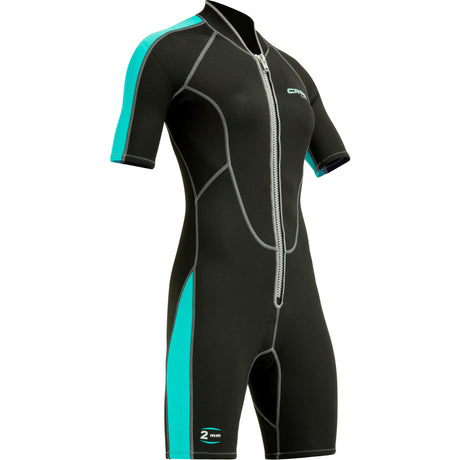
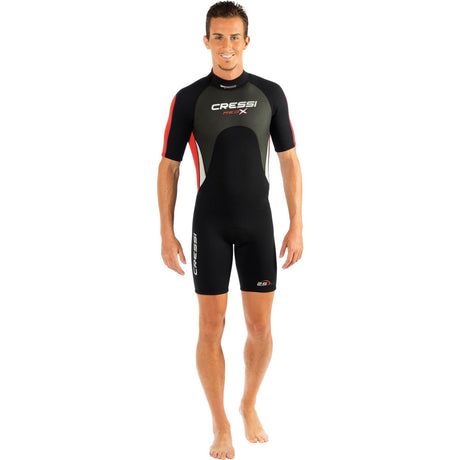
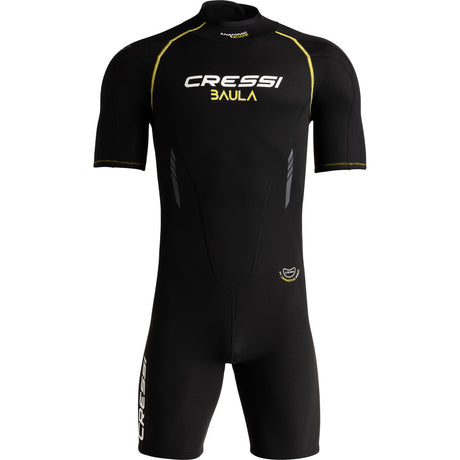
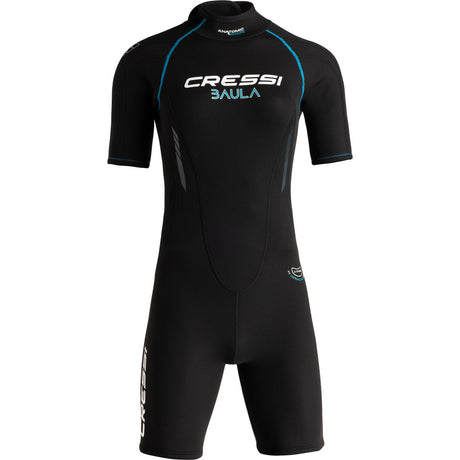
As a gear producer, we’re acutely aware that the products we make take materials, energy, packaging, and shipping. Before a mask, fins, regulator, or wetsuit ever reaches a diver, it already has a footprint. And that’s why we take our responsibility to the ocean so seriously.
For Cressi, caring for the ocean starts with how we make and package our gear, but it doesn’t end there. It also means supporting the researchers, conservationists, educators, and storytellers doing the work of protecting the underwater world our products are made to explore.
That work takes different forms, and the people we highlight here reflect that range. Some are marine scientists and nonprofit founders. Some are field researchers, wildlife storytellers, and public educators. What connects them is not a single job title, but a shared commitment to the ocean.
Responsibility starts with how gear is made
Any company that makes dive gear is using resources, energy, materials, and packaging to put products into the world; there’s just no way around it. So, if we want to talk about responsibility, it has to start with the fact that production has an environmental footprint before any of that gear ever reaches the water.
Responsibility can take many forms, from greener production methods to more durable and repairable products, reduced plastic in packaging, and operational choices that lower unnecessary waste where possible.
For Cressi, that means specific steps rather than broad claims. Since 2019, our headquarters and production have operated with renewable energy through LifeGate, an Italian sustainability company and clean-energy provider.
We have also worked to reduce plastic in our packaging by replacing it with recycled or recyclable materials where possible. These steps do not solve everything, but they are concrete decisions, and a more honest place to begin than pretending a dive brand can stand outside the problem. 
Longevity belongs in the sustainability conversation
When divers talk about sustainability and gear, the conversation often jumps straight to materials. Materials matter, but longevity matters too. A piece of equipment that stays in use for years has a different relationship to waste than something built to be replaced quickly.
That is one reason durability matters so much to Cressi’s identity. In our own corporate communications, Marco Cressi ties reparable, durable equipment not only to comfort and familiarity for the diver, but also to a lower environmental burden.
This may not be the most exciting way to talk about sustainability, but it’s the most realistic. Long-lasting gear doesn’t solve everything, but it does push back against the culture of quick replacement that creates so much unnecessary waste.
Responsibility also means recognizing where the real work is happening
Researchers, nonprofit founders, wildlife storytellers, and educators often have a much more direct relationship with the challenges facing the ocean than a gear company ever could. Supporting that work and learning from it is a big part of Cressi’s commitment to a greener future.
For Cressi, that means being clear about our role: we make the gear, but we also choose to stand beside people whose research, education, conservation work, and public storytelling give this conversation real weight.
Craig O’Connell and youth-focused shark conservation
Craig O’Connell is one of the clearest examples of what that relationship can look like. A shark biologist and marine conservation volunteer, Craig has received gear support from Cressi for his shark conservation research over several years as an ambassador.
“Cressi’s support has had a very real, practical impact on what we’re able to accomplish in the field,” says Craig. “When you’re working offshore, often in challenging conditions, you need gear that is reliable, functional, and built to perform.”
That relationship makes sense in the context of his broader work through O’Seas Conservation Foundation, a non-profit that combines shark conservation with youth education through research and hands-on programs that connect students directly to shark, skate, and ray science.
“Right now, our main focuses are identifying and protecting critical shark habitats (identifying shark nursery and parturition areas), developing novel ways to protect sharks, and expanding hands-on education through our main research location, Montauk Shark Lab,” says Craig.
This kind of project matters because it connects conservation to participation, because “research without education doesn’t lead to change."
“We can publish papers and make discoveries, but if the public, especially the next generation, doesn’t understand or care, then conservation efforts stall,” he adds. “Kids are naturally curious and open-minded, and when they have a positive, hands-on experience with sharks, it completely reshapes how they view them.”
For the O’Seas Conservation Foundation, this research plus education approach means they’re not just studying sharks, “we’re building the next generation of ocean stewards who will ultimately be responsible for protecting them.”
In Craig’s case, Cressi’s relationship is tied not just to shared values, but to practical support for educational initiatives already happening in the field.
“Cressi has donated a large amount of gear so our summer shark camp students can also experience the underwater environment,” he says. “Because of this, we have been able to conduct water-based conservation engineering courses, fish ID courses, and shark safety courses, which have all positively impacted the lives of so many youth.”
“When you’re focused on sharks and the [surrounding] environment, you need to know your gear is the last thing you have to think about.”—Craig O’Connell
Neil Hammerschlag and research that changes public perception
Neil Hammerschlag’s relationship to Cressi is also direct. As a Cressi Ocean Ambassador, he brings together research, public education, and firsthand shark experience in a way that fits naturally with this conversation.
“My biggest priorities right now are understanding how sharks behave and interact with their environment, identifying the habitats that are most important to them, and determining how they are responding to human pressures such as pollution and overfishing,” says Neil.
Neil is the founder and executive director of the Shark Research Foundation, which works to increase scientific knowledge, improve public perceptions, and promote shark conservation through research and education.
“Through the Shark Research Foundation, where I serve as founding Executive Director, we focus on conserving sharks through both research and education,” he says. “While advancing scientific knowledge is essential, it’s equally important that this information reaches the public and policymakers.”
He is also president of Atlantic Shark Expeditions, an organization built around ecotourism and citizen science that gives the public opportunities to cage dive with a variety of sharks.
“I founded Atlantic Shark Expeditions in Nova Scotia, Canada to give the public the opportunity to view and cage dive with sharks in the wild, while learning directly from researchers and supporting the science happening onboard,” says Neil.
That combination of research, education, and direct field experience is especially relevant here. Sharks are still burdened by fear, myth, and misunderstanding, and work that improves both scientific knowledge and public perception is key when it comes to their survival and conservation.
It also shows that responsibility can take more than one form. Sometimes it looks like formal marine research, but sometimes it means creating accessible ways for people to see sharks for themselves. Our relationship with Neil is meaningful for exactly that reason: his work already connects gear, field experience, and public understanding in a visible and practical way.
“The partnership with Cressi aligns closely with how I operate,” he says.
“On a practical level, their gear provides the dependability, functionality, and comfort I need in demanding field conditions. It also enables Atlantic Shark Expeditions to provide the public with safe and comfortable cage diving experiences with sharks in the wild, which is essential for our citizen science, research, and outreach efforts.”
“Beyond the practical side, [Cressi and I] share a common passion for exploration and for connecting people with the ocean.”—Neil Hammerschlag
Forrest Galante and the role of public storytelling
Forrest Galante belongs in this conversation too, though for a different reason. We’ve included Forrest among our ambassadors and partners because his work helps bring wildlife and conservation stories into broader public view.
His role here is less about formal marine research and more about public-facing storytelling that makes endangered species, threatened habitats, and the urgency of conservation feel real to a wider audience.
“That’s very impactful because I’m able to reach people whether they’re 3 or 100 years old,” Forrest says, “people from different countries, and even those who’ve never even stepped into the field before. This curiosity that the viewers get is only the tip of the iceberg, and once they feel connected to a species, and the plight that it may be facing, that curiosity can turn into a real emotion.”
That matters to us because not every connection to conservation begins in science. Sometimes it begins with seeing a wild place, an animal, or a story in a way that makes someone want to care more deeply about what happens next.
“Public awareness plays a huge role in conservation,” says Forrest.
"For a lot of people, the closest they’ll get to species like African elephants, ghost sharks, or Asiatic lions is through a screen. And that’s why public awareness like this is so important.
When I’m able to help someone understand an animal by highlighting issues such as what they need from us and the threats they face, then that species now has a voice. Whether I’m doing that through TV, social media, or even YouTube, the viewers are given a chance to connect with something they might otherwise never even think about.”
In Forrest’s case, our relationship is best described as support for all wildlife conservation, not just what lives underwater, and support from Cressi is crucial.
"Support from a brand like Cressi is so important to me and my team,” says Forrest.
People only end up seeing 45 minutes of our polished shows on their TV, but what they don’t see is everything it takes to get to the location and film our stories the way they’re meant to be filmed. And without reliable equipment, a lot of our work wouldn’t even be possible.”
“That’s the power of public awareness. Because once people care, some of them end up becoming the ones who actually step up and fight for these species.”—Forrest Galante
Long-term thinking matters more than big claims
This may be the clearest way to think about our commitment to sustainability. Responsibility is not a one-off initiative, nor a line of eco-text inserted into our catalog when new gear comes out. It’s a long, ongoing habit.
Care for the environment shows up when a company chooses durability over disposability, repair over replacement, and transparency over trendy claims. It also shows up when the people and projects it highlights are doing important work, whether that’s shark research, youth education, species recovery, or public storytelling that helps people connect with the ocean. Trust is built when it becomes clear that “Cressi Cares” isn’t just a slogan.
Caring for the ocean is part of making the gear
For us, this is the connection that matters most. The water and everything within it isn’t just a backdrop for our business, it’s our entire reason for existing. If we’re going to put our gear into the ocean and ask divers to trust it, then environmental responsibility cannot sit off to the side as a separate talking point.
It has to be part of the same conversation. That’s what Cressi Cares is here to show: not that a company can fix everything, but that it can take its share of the responsibility seriously.