Although your open-water certification gives you the basics for safe scuba diving, it can’t teach you what it actually feels like once you’re on your own (with a buddy, of course). Scuba lessons will come one dive at a time, and you’ll probably learn things about yourself, and the underwater world, that you weren’t even expecting.
Here's what most divers figure out in their first 10 dives.

1. You will breathe too fast at first
Excitement, novelty, and mild nerves mean you’ll probably burn through your air relatively fast on your first few dives. Don’t worry too much about it; just begin to pay attention to the cadence of your breath while you’re diving.
Consciously slowing your breathing, with longer inhales and exhales, is the most impactful adjustment you can make early on. When your breathing slows down, not only will your air last longer, but your buoyancy will also improve.

2. Buoyancy is an ongoing process
Speaking of buoyancy, it’s an ongoing process. It’s not something you’ll master immediately, and it will change based on your dive environment and gear. New divers tend to rely heavily on their BCD’s inflator/deflator buttons to adjust buoyancy, but after a few dives, you’ll discover that your breath does most of the fine-tuning.
Inhale and you’ll rise a little; exhale and you’ll sink a little, with the goal being to maintain a stable position in the water column. When it comes to larger buoyancy adjustments, a well-designed BCD with responsive dump valves will do the trick. Cressi's Start Pro 2.0 is built with exactly this in mind.

3. Rent before you buy
Although there are a few key pieces of gear you should buy before your OW class (mask/snorkel, fins, and wetsuit), it’s best to take it slow with the rest of your gear. Get a few dives under your belt before you commit to a BCD to learn what you like.
Although you may have completed your course in a jacket-style BCD, you might prefer a back-inflate, and you won’t know until you try. The same goes for your regulator. Try a few different models and consider what type of environment you’ll be diving in before you make a purchase.

4. Your fins are closer to the reef than you think
You will probably make accidental contact with the bottom or reef at some point. And you will feel terrible about it, as the ironclad rule of touching nothing underwater is emphasized from the very beginning. Again, don’t beat yourself up too much.
As you dive, you’ll learn spatial awareness. You’ll learn where your fins are, how much room you need to turn, how far your body is from the reef, your buddy, and anything else around you. Spatial awareness is one of the most important skills you’ll develop, and mastering it is one of the things that truly sets new divers apart from experienced ones.

5. You may get unexpectedly cold
Diving in 82F (28C) water sounds pretty comfortable, right? But even in tropical destinations, temperature can drop with depth. A dive that starts at a comfortable 82F can hit the high 70s at depth. That still sounds warm, but remember: your body loses heat approximately 25 times faster in water than in still air. You are far more likely to get too cold underwater than too hot. Once that happens on a dive it’s hard to think about anything else.
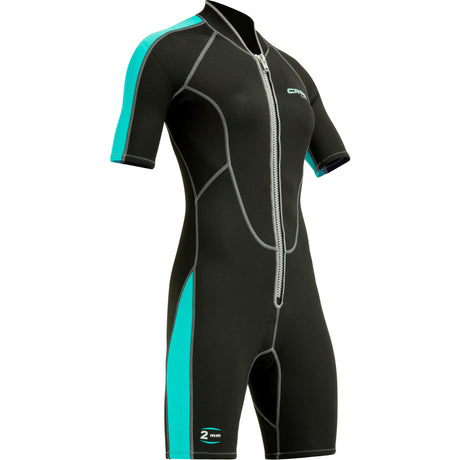
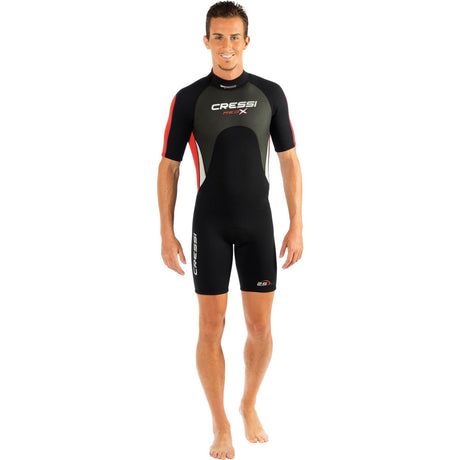
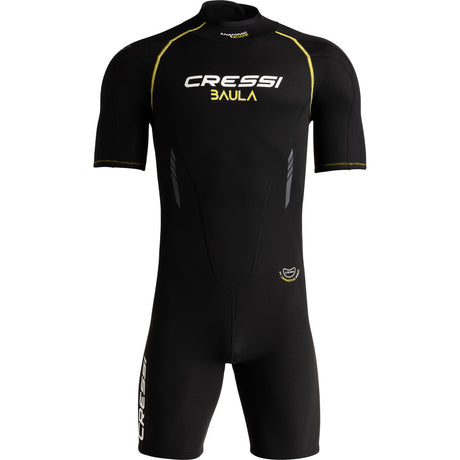
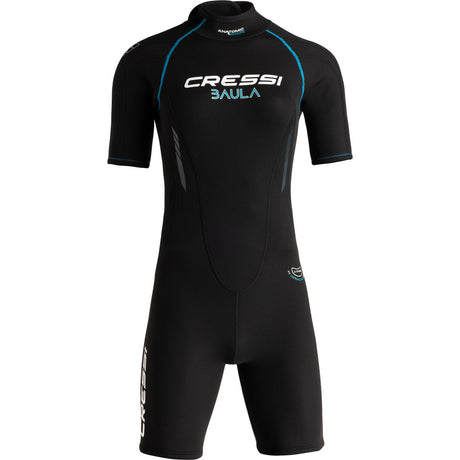
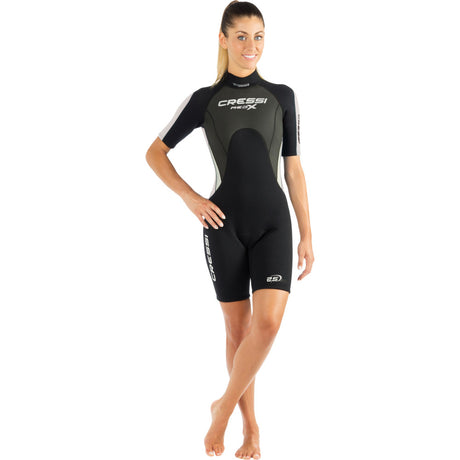
If you’re only diving once or twice in a day, you may be fine with minimal exposure protection, but if you’re doing multiple dives or spending a week on a liveaboard, you’ll likely want more neoprene than you think. Cressi’s Fast line covers the full range from 1mm to 7mm to help you plan accordingly.
6. Equalizing early and often is key
The first, and most important, rule of equalizing is to do it early and often. As a new diver, you may think you just need to clear your ears on first descent, which you do, but you’ll likely be moving up and down slightly in the water column during your entire dive.
The key is to equalize before you feel any pressure in your ears. Practice the different methods while you’re diving to see what works for you, and do it even if you don’t think you need to. Your ears will thank you later.
7. Your air consumption reflects your progress
Like we said, new divers tend to burn through air faster because of nerves or buoyancy adjustment issues. Once you relax and learn to move efficiently underwater you’ll notice a marked decrease in the amount of air you consume.
Watching your consumption improve over time means not only that your dives can get longer but also that you’ll have real bragging rights on the boat when you always come up with half a tank.

8. Your buddy checks (and buddy) really do matter
You learned BWRAF in your OW class, but do you remember what it stands for? (It’s BCD, weights, releases, air, and final check). Buddy procedures are taught as essential safety protocol, and they remain that way throughout your diving career. Don’t get lazy and skip a step; we have all done it, but that doesn’t make it a wise move.
Maintaining situational awareness about your buddy matters too. They are your reference point underwater, and though you must be self-sufficient as per dive training, they’re also your helping hand should something go awry. Learn to stay within range, read hand signals accurately, and actually look out for each other. A buddy who ditches you to take photos or swims far ahead of or behind you is no buddy at all.
9. The gear disappears when it fits right
There's no getting around the fact that our sport is 100% gear dependent. You can be the “best” diver in the world, but if your regulator constantly free-flows or your fin straps continually break because of poor quality, you are not going to enjoy your dives.
Investing in quality gear that serves your style of diving is one of the best investments you can make when it comes to enjoying this sport. And that’s the irony: once you spend a lot of time thinking about what gear you want and then purchasing it, that’s when it disappears into the background. Good gear is supposed to get out of the way and let your dive unfold without incident.

10. Ten dives is just the beginning
If you complete 10 dives after your certification course you won’t be neutral about diving. You’ll either decide it’s not for you or you’ll join the rest of us, eagerly planning your next trip before the one you’re on is even over.
If you make it to 10 dives, you’ll likely be planning your Advanced Open Water course to visit deeper dive sites, or figuring out which specialties you’ll pursue. As you progress as a diver, just remember that it’s a cliché but it’s true: this is a journey, not a destination. Welcome to the family.